
Legacy Giving
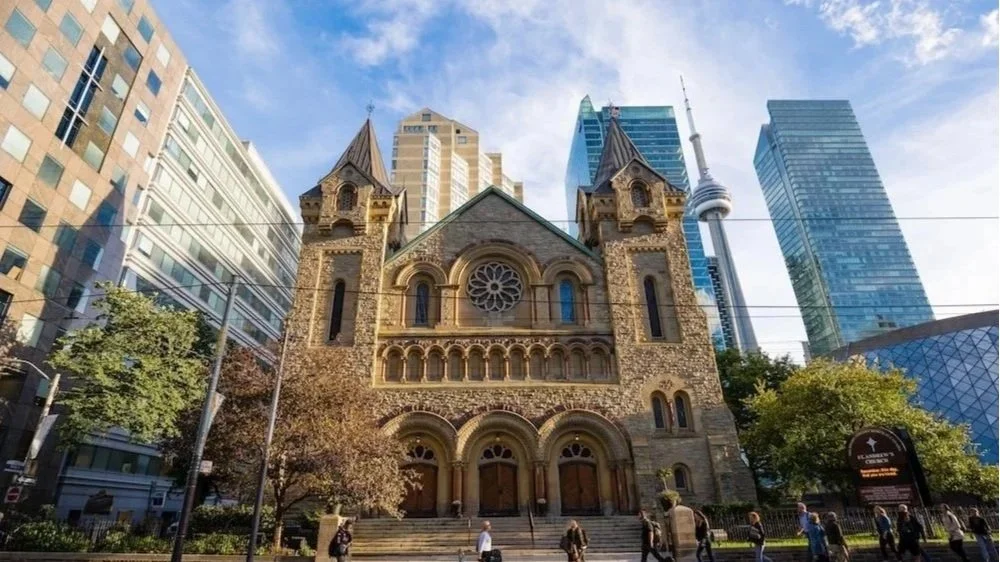
St. Andrew's Church has been a place of worship and community for nearly 200 years. As members and friends of this church we share a deep sense of gratitude for those in the past who helped to ensure that St. Andrew’s was here for us. They supported the church in their lifetimes, and then made legacy gifts in their wills to provide for the long-term benefit of the generations who followed.
A legacy gift is a donation that you make to St. Andrew’s as a bequest through your will. You can also name the church as the beneficiary of a life insurance policy, or with funds held in your Registered Retirement savings plans.
A bequest made from the accumulated assets in your estate allows you to make a much larger donation than might have otherwise been possible in your lifetime. Making a legacy gift brings a sense of fulfillment to your own life today, it will also create a substantial tax benefit for your estate.
Unrestricted bequests are used to support the area of greatest need at St. Andrew’s, and is therefore most beneficial for the church. If you prefer, you can designate your bequest to a specific area that is especially meaningful to you. St. Andrew’s also has an endowment fund called the St. Andrew’s Heritage Trust, where your gift will be held in perpetuity and only the annual income used each year.
Here are the ways you can make a legacy gift to St. Andrew's Church:
1. A Bequest in your Will
Wills are the central pillars of estate planning. You can make a gift in your will, known as a bequest, for a specific dollar amount or for a share or a percentage of your estate.
Benefits of making a bequest
You retain the use of your asset during your lifetime
Your legacy gift ensures the continued vitality of St. Andrew's Church for future generations
You can designate your bequest for the area of greatest need or for use in an area of the church that is especially meaningful for you
A bequest reduces taxes owed by your estate
A bequest is revocable and can be modified if your financial circumstances change
Here is the wording to use in your will:
Suggested Wording for Making an Expendable Bequest
“To pay to St. Andrew’s Heritage Trust, (charitable registration number BN: 119163566RR0001) _____ % of the residue of my estate [or the sum of $____________] to be used for such purposes and designs as deemed appropriate by the Session of St. Andrew's Church.”
Note: Expendable bequests are used in their entirety for areas of greatest need, generally within a relatively short time frame.
Suggested Wording for Making a Bequest to the Endowment Fund (the St. Andrew’s Heritage Trust)
“To pay to St. Andrew’s Heritage Trust, (charitable registration number (BN: 119163566RR0001) _____ % of the residue of my estate [or the sum of $____________] to be applied to the Endowment Fund, the annual income from which to be used for such purposes and designs as deemed appropriate by the Session of St. Andrew's Church.”
Suggested Wording for Making an Endowed Bequest to a Specific Area of the Church
“To pay to St. Andrew’s Heritage Trust, (charitable registration number (BN: 119163566RR0001) _____ % of the residue of my estate [or the sum of $____________] to be applied to the [describe the specific area you wish to support), the annual income from which to be used to support such activities in perpetuity.”
To discuss establishing an endowed bequest to a specific area of the church, please contact Graeme Hepburn, Chair of the St. Andrew’s Heritage Trust, at graeme@hepburn.to.
Note: Endowed bequests are retained and invested in perpetuity and only the income is spent on an annual basis.
Establishing a Named Endowed Fund
You may also create a Named Endowment Fund within the St. Andrew’s Heritage Trust that bears your name or the name of someone else of your choosing. Named endowment funds are recognized in perpetuity in the annual report of the St. Andrew’s Heritage Trust.
To discuss establishing a Named Endowment Fund please contact Graeme Hepburn, Chair of the St. Andrew’s Heritage Trust, at graeme@hepburn.to
2. Designation of Registered Retirement Funds
St. Andrew's Church can be named as a direct beneficiary of Registered Retirement Savings Plans (RRSPs) and Registered Retirement Income Funds (RRIFs).
Benefits of planned gifts of RRSPs and RRIFs
There is no cost to make a bequest using your registered retirement fund
Your gift will be private, as these types of gifts are not made through your will
Generate a charitable tax receipt to offset taxes that become due in the year of death, when the remaining funds in most RRSPs/RRIFs become fully taxable as income
How to arrange a gift of RRSPs and RRIFs to St. Andrew's Church
Fill out the beneficiary designation clause of your RRSPs and RRIFs using the legal name
“The St. Andrew’s Heritage Trust (charitable registration number BN: 119163566RR0001)”
How to use your RRIF to make an immediate as well as a future impact
If you find that you do not need the required annual withdrawal from your RRIF, you may consider donating this annual amount to St. Andrew’s to offset your taxes.
3. A Gift of a Life Insurance
A gift of a life insurance policy can be an effective way of making a legacy gift to St. Andrew's Church. There are two ways to donate through life insurance:
1. By making St. Andrew's Church both the owner and the beneficiary of an existing, paid-up policy that you own. If you have an old policy that was made for a purpose that you no longer need, donating that policy will generate an immediate tax receipt for the cash-surrender value of the policy.*
2. By making St. Andrew's Church the beneficiary of an insurance policy that you own. This will result in a tax receipt for your estate for the amount of the paid benefit to St. Andrew's Church.
Benefits of a gift of life insurance
Receive a charitable tax receipt, either immediately or to your estate
Gifts of life insurance are not included in probate
*Please note that St. Andrew's Church is unable to accept policies where premiums are still owed, so the policy you donate to the Church must be a paid-up policy. Also, you, the owner of the policy, are responsible for receiving from your insurance company an actuarial valuation of the policy to be donated before it can be receipted by St. Andrew’s.
If you have questions or need assistance, contact:
Graeme Hepburn, Chair of the St. Andrew’s Heritage Trust, at graeme@hepburn.to or John Matheson, Church Treasurer, at jmmatheson@rogers.com.